No Products in the Cart
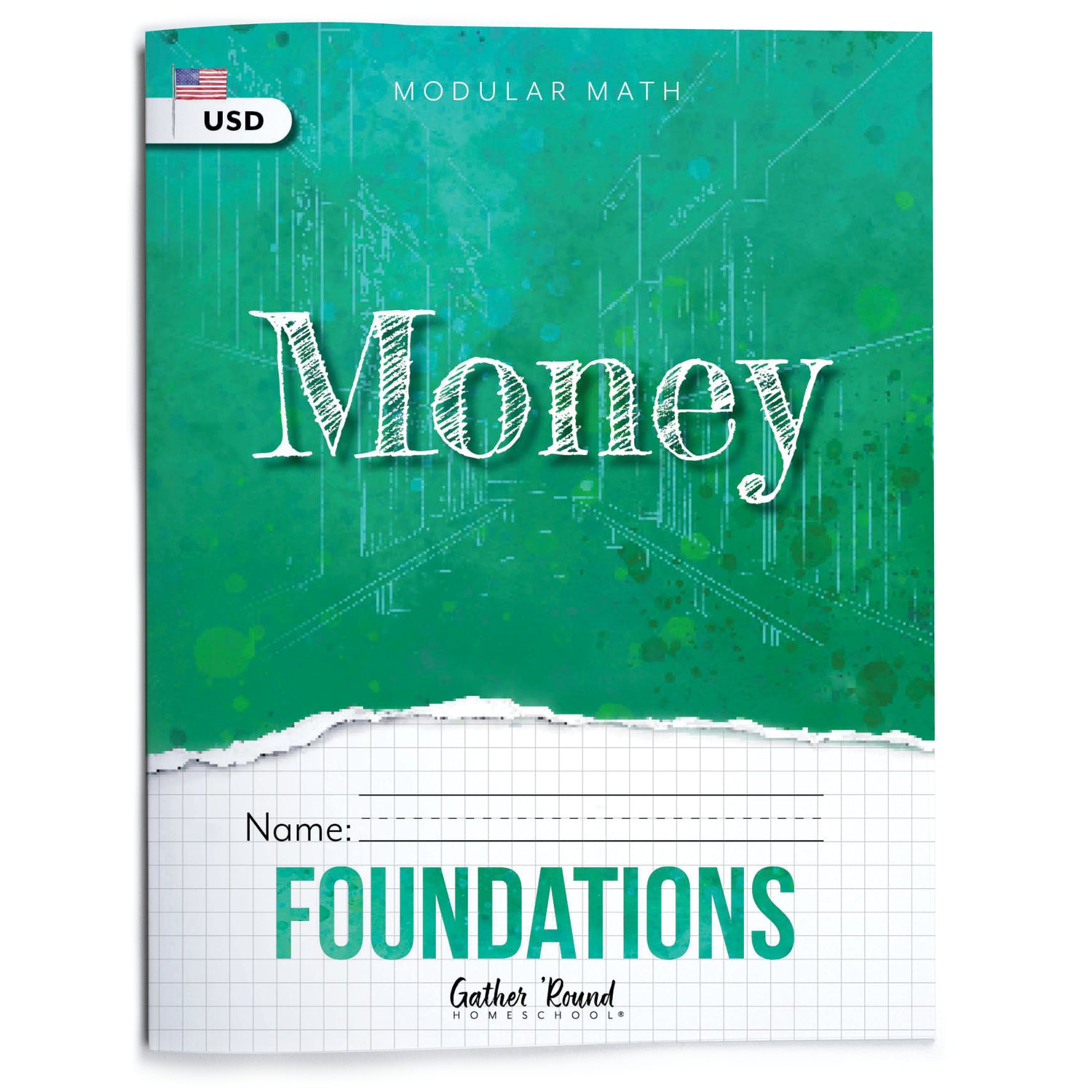
This unit of Modular Math (geared from Kindergarten–Grades 7 and 8) focuses on the basics of money and building a healthy view of it. Students are introduced to the different forms of currency, including coins and bills. Unique to this unit is the ability for Foundations level learners to choose from an American or Canadian version to reduce confusion as they learn the different types of money they will be using in real life. Levels 1–6 return to the regular single version. Concepts include adding, subtracting, saving, spending, tithing, and investing money. Beginning steps will learn about shopping, tax, receipts, and banks. Higher levels build on these concepts and further dive into the smart use of money, including credit, bankruptcy, assets, and fraud. Our spiral and mastery style program introduces basic money concepts and continues to reinforce them throughout the entire program.
What level should I get? We want to help you find the perfect spot for your student and have come up with a number of ways to help you both estimate and pinpoint the best starting point. Take a look at how the different levels add up, and be sure to check out the placement tests!
Foundations: Kindergarten
Step 1: Grade 1
Step 2: Grade 2
Step 3: Grade 3
Step 4: Grade 4
Step 5: Grade 5/6
Step 6: Grade 7/8
Once you know around where your student will fit, you'll want to take our simple, online placement tests. These tests are designed to determine if you are ready for a particular level. So if you wanted to see if your student was ready for Step 3, you would take the step 3 placement test. This will be testing them on the content from step 2 to see if they have learned these concepts. If they get less than 80%, we recommend trying a lower placement test. If they get 80% or higher, we recommend taking the next step up (and continuing until you hit a lower percentage). If your student wants to move forward with a step but has a few gaps, you can simply purchase the skill builder for those concepts to get them ready while you wait for your math to come in!
| Pre-Reader | Early Reader | Early Elementary | Upper Elementary | Middle School | High School |
|---|---|---|---|---|---|
| 3–5 yo | 5–7 yo | 8–10 yo | 10–12 yo | 13–15 yo | 15–18 yo |
| Dictation | Little to no writing | Writing with a word box | Independent work | More research + paragraphs | Essays and research |
| 2 pages per day | 5 pages per day | 5 pages per day | 5 pages per day | 5 pages per day | 5 pages per day |
| Takes about 5–10 minutes | Takes about 30–60 minutes | Takes about 45 min–1 1/2 hours | Takes about 1–2 hours | Takes about 1 1/2–2 hours | Takes about 2–3 hours |
| Does not cover all your subjects | Everything but math | Everything but math | Everything but math | Everything but math | Everything but math |
| Keeps little ones busy and involved | Good for reluctant writers | Good for budding writers | Confident writer (but still needs to grow in skills) | Strong writer | Proficient writer |