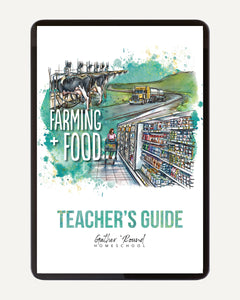
Farming and Food Unit

Digital Bundles
Original Price: $28.00 USD   Current Price: $28.00 USD
Farming and Food is a Full Unit that helps your family slow down and learn where food really comes from and how it reaches your kitchen.
Format
Level
$28.00 USD ea. Mix & Match
  • Pre-Reader Bundle $28.00 ea. Sold out
  • Early Reader Bundle $28.00 ea. Sold out
  • Early Elementary Bundle $28.00 ea. Sold out
  • Upper Elementary Bundle $28.00 ea. Sold out
  • Middle School Bundle $28.00 ea. Sold out
  • High School Bundle $28.00 ea. Sold out
$65.00 USD $168.00

Teacher's Guide + Pre-reader + Early Reader + Early Elementary + Upper Elementary + Middle School + High School

Best value

Try a Free Sample (Opens in a new window.)

Final sale, digital products are non-refundable.

Add an Academy Pass

Current Price: $224.10 USD Original Price: $249.00 USD  

Every live and on-demand course for your whole family. New members can join until December 17. The new Gather ’Round Academy opens January 2027.

  • Open & Go Lessons
  • Christian Curriculum
  • Instant Download

Complete Your Lesson Plans

  • Farming and Food Cursive Writing
    Original Price: $13.00   Current Price: $13.00
  • Farming and Food: Food Journal
    Original Price: $13.00   Current Price: $13.00
  • Living Off the Land Unit
    Original Price: $28.00   Current Price: $28.00

Quick Facts

  • Format: Digital PDFs
  • Unit type: Full Unit
  • Pages: Teacher's Guide 154; student books 60–140 by level
  • Release year: 2021
  • Length: 20 lessons (4-5 weeks)
  • Levels: Multi-age with leveled Student Notebooks (Pre-Reader-High School)
  • Daily work: 5 student pages per day (Early Reader and up)
  • Writing project: Shopping list + food log + documenting the story of your food
  • Grammar focus: Contractions, homophones (Middle School-High School)
  • Author: Ruth-Ann Dyck

About this Product

Farming and Food is a Full Unit that helps your family slow down and learn where food really comes from, how it's grown, raised, processed, and brought all the way to your kitchen. It's practical, memorable, and full of real-life connections your kids will notice every single day after you finish.

The writing project is especially fun and useful: students learn how to make a shopping list, keep a food log, and document the story of their food, where it came from and how it got to them. If you've ever wanted your kids to understand food beyond "it came from the store," this unit is for you.

The unit is designed to cover all your subjects (math available separately).

  • Format: Digital PDFs
  • Unit type: Full Unit
  • Pages: Teacher's Guide 154; student books 60–140 by level
  • Release year: 2021
  • Length: 20 lessons (4-5 weeks)
  • Levels: Multi-age with leveled Student Notebooks (Pre-Reader-High School)
  • Daily work: 5 student pages per day (Early Reader and up)
  • Writing project: Shopping list + food log + documenting the story of your food
  • Grammar focus: Contractions, homophones (Middle School-High School)
  • Author: Ruth-Ann Dyck

What’s in the Teacher’s Guide?

  • Required for teaching
  • One guide for the whole family

You will need one Teacher’s Guide, plus one Student Book for each student.

All 20 lessons

  1. Lesson 1Types of Farms
  2. Lesson 2Grain Farms
  3. Lesson 3Dairy Farms
  4. Lesson 4Flower Farms
  5. Lesson 5Poultry Farms
  6. Lesson 6Bee Farms
  7. Lesson 7Fish Farms
  8. Lesson 8Cattle Ranches
  9. Lesson 9Sheep Farms
  10. Lesson 10Pig Farms
  11. Lesson 11Goat Farms
  12. Lesson 12Fruit Farms
  13. Lesson 13Mediterranean Farms
  14. Lesson 14Mushroom Farms
  15. Lesson 15Coffee Plantations
  16. Lesson 16Legume Farms
  17. Lesson 17Sugar Plantations
  18. Lesson 18Vegetable Farms
  19. Lesson 19Farming Around the World
  20. Lesson 20Amazing Farms!

What’s in Pre-Reader?

Recommended for younger students who are not ready to read/write (preschool/kindergarten age).

All 40 student pages

  1. Lesson 1Types of Farms
    • ColoringArt
    • Farming LifeSocial Studies
  2. Lesson 2Grain Farms
    • ColoringArt
    • GMOsScience
  3. Lesson 3Dairy Farms
    • ColoringArt
    • PasteurizationScience
  4. Lesson 4Flower Farms
    • ColoringBible + Art
    • Flower ProductionSocial Studies + Geography
  5. Lesson 5Poultry Farms
    • ColoringArt
    • Food SafetyHome Economics + Science
  6. Lesson 6Bee Farms
    • ColoringArt
    • Geometric ArtMath + Art
  7. Lesson 7Fish Farms
    • ColoringArt + Bible
    • NutritionScience
  8. Lesson 8Cattle Ranches
    • ColoringArt
    • Meat Preparation + StorageSocial Studies
  9. Lesson 9Sheep Farms
    • Drawing + ColoringArt
    • The ShepherdBible
  10. Lesson 10Pig Farms
    • ColoringArt
    • Sense of SmellScience
  11. Lesson 11Goat Farms
    • ColoringArt
    • Animal JournalArt + Science
  12. Lesson 12Fruit Farms
    • ColoringArt
    • Fruit SaladHome Economics
  13. Lesson 13Mediterranean Farms
    • ColoringArt
    • Mount of OlivesBible
  14. Lesson 14Mushroom Farms
    • Coloring + PerspectiveArt
    • FungusScience
  15. Lesson 15Coffee Plantations
    • ColoringArt
    • Coffee ProducersGeography
  16. Lesson 16Legume Farms
    • ColoringArt
    • Peanut ButterScience
  17. Lesson 17Sugar Plantations
    • ColoringArt
    • RefiningBible
  18. Lesson 18Vegetable Farms
    • ColoringArt
    • GreenhouseScience
  19. Lesson 19Farming Around the World
    • ColoringArt
    • Corn TortillasHome Economics
  20. Lesson 20Amazing Farms!
    • ColoringArt
    • Plan Your FarmSocial Studies

What’s in Early Reader?

Recommended for emerging readers/writers (6-8 years old).

All 100 student pages

  1. Lesson 1Types of Farms
    • NotebookingSocial Studies
    • Farming LifeSocial Studies
    • What’s In My Food?Language Arts
    • OrganicScience + Social Studies
    • PredictionsLanguage Arts
  2. Lesson 2Grain Farms
    • NotebookingLanguage Arts + Social Studies
    • GMOsScience
    • Spelling + VocabularyLanguage Arts
    • Then + NowSocial Studies
    • ThreshingBible
  3. Lesson 3Dairy Farms
    • NotebookingLanguage Arts + Social Studies
    • PasteurizationScience
    • Organizing a ListLanguage Arts
    • Louis PasteurHistory
    • Dairy CowArt
  4. Lesson 4Flower Farms
    • NotebookingLanguage Arts + Art
    • Temperature-Controlled EnvironmentScience
    • GrammarLanguage Arts
    • Flower ProductionSocial Studies + Geography
    • God Cares for MeBible
  5. Lesson 5Poultry Farms
    • NotebookingLanguage Arts + Social Studies
    • Chickens + EggsScience
    • Food SourcesGeography
    • FreewritingLanguage Arts
    • Food SafetyHome Economics + Science
  6. Lesson 6Bee Farms
    • NotebookingLanguage Arts + Social Studies
    • Making HoneyScience
    • Spelling + VocabularyLanguage Arts
    • Protective WaxScience
    • Geometric ArtMath + Art
  7. Lesson 7Fish Farms
    • NotebookingLanguage Arts + Social Studies
    • NutritionScience
    • Tracking My FoodGeography + Social Studies
    • ControversiesSocial Studies
    • Fishers of MenBible
  8. Lesson 8Cattle Ranches
    • NotebookingLanguage Arts + Social Studies
    • Caring for CattleSocial Studies
    • GrammarLanguage Arts
    • Meat Preparation + StorageSocial Studies
    • Selective BreedingScience + Bible
  9. Lesson 9Sheep Farms
    • NotebookingLanguage Arts + Art
    • InsulationScience
    • Food LogLanguage Arts + Science
    • Fight, Flight, or FreezeSocial Studies
    • The ShepherdBible
  10. Lesson 10Pig Farms
    • NotebookingLanguage Arts + Geography
    • Sense of SmellScience
    • Spelling + VocabularyLanguage Arts
    • Charlotte’s WebLanguage Arts
    • The Pig WarHistory
  11. Lesson 11Goat Farms
    • NotebookingLanguage Arts + Social Studies
    • Making SoapScience
    • Analyzing Your Food LogLanguage Arts
    • Magic vs. TricksSocial Studies
    • Animal JournalArt + Science
  12. Lesson 12Fruit Farms
    • NotebookingLanguage Arts + Social Studies
    • OxidationScience
    • GrammarLanguage Arts
    • Washington’s Cherry TreeHistory + Bible
    • Fruit SaladHome Economics
  13. Lesson 13Mediterranean Farms
    • NotebookingLanguage Arts + Art
    • DehydrationScience
    • BudgetingHome Economics + Math
    • Mediterranean RegionGeography
    • Mount of OlivesBible
  14. Lesson 14Mushroom Farms
    • NotebookingLanguage Arts + Science
    • FungusScience
    • Spelling + VocabularyLanguage Arts
    • FreewritingLanguage Arts
    • PerspectiveArt
  15. Lesson 15Coffee Plantations
    • NotebookingLanguage Arts + Art
    • Field StudyMath + Social Studies
    • Farming IndustryLanguage Arts
    • Coffee ProducersGeography
    • Fair TradeSocial Studies
  16. Lesson 16Legume Farms
    • NotebookingLanguage Arts + Social Studies
    • Peanut ButterScience
    • GrammarLanguage Arts
    • Types of DietsSocial Studies
    • Three SistersHistory + Art
  17. Lesson 17Sugar Plantations
    • NotebookingLanguage Arts + Social Studies
    • Sugar AddictionScience
    • Story of My FoodLanguage Arts
    • Sugar TaxSocial Studies
    • RefiningBible
  18. Lesson 18Vegetable Farms
    • NotebookingLanguage Arts + Social Studies
    • GreenhouseScience
    • Spelling + VocabularyLanguage Arts
    • ImmigrationSocial Studies
    • Cross SectionsArt
  19. Lesson 19Farming Around the World
    • NotebookingSocial Studies + Geography
    • Corn TortillasHome Economics
    • Story of My FoodLanguage Arts
    • OpioidsSocial Studies
    • Trust + ObeyBible
  20. Lesson 20Amazing Farms!
    • Then vs. NowHistory + Social Studies
    • Plan Your FarmSocial Studies
    • Farm NeedsGeography + Social Studies
    • Sketch Your FarmArt
    • GrammarLanguage Arts

What’s in Early Elementary?

Recommended for students who are comfortable using a word bank to write some of their answers (8-10 years old).

All 100 student pages

  1. Lesson 1Types of Farms
    • NotebookingSocial Studies
    • Farming LifeSocial Studies
    • What’s In My Food?Language Arts
    • OrganicScience + Social Studies
    • PredictionsLanguage Arts
  2. Lesson 2Grain Farms
    • NotebookingLanguage Arts + Social Studies
    • GMOsScience
    • Spelling + VocabularyLanguage Arts
    • Then + NowSocial Studies
    • ThreshingBible
  3. Lesson 3Dairy Farms
    • NotebookingLanguage Arts + Social Studies
    • PasteurizationScience
    • Organizing a ListLanguage Arts
    • Louis PasteurHistory
    • Dairy CowArt
  4. Lesson 4Flower Farms
    • NotebookingLanguage Arts + Art
    • Temperature-Controlled EnvironmentScience
    • GrammarLanguage Arts
    • Flower ProductionSocial Studies + Geography
    • God Cares for MeBible
  5. Lesson 5Poultry Farms
    • NotebookingLanguage Arts + Social Studies
    • Chickens + EggsScience
    • Food SourcesGeography
    • FreewritingLanguage Arts
    • Food SafetyHome Economics + Science
  6. Lesson 6Bee Farms
    • NotebookingLanguage Arts + Social Studies
    • Making HoneyScience
    • Spelling + VocabularyLanguage Arts
    • Protective WaxScience
    • Geometric ArtMath + Art
  7. Lesson 7Fish Farms
    • NotebookingLanguage Arts + Social Studies
    • NutritionScience
    • Tracking My FoodGeography + Social Studies
    • ControversiesSocial Studies
    • Fishers of MenBible
  8. Lesson 8Cattle Ranches
    • NotebookingLanguage Arts + Social Studies
    • Caring for CattleSocial Studies
    • GrammarLanguage Arts
    • Meat Preparation + StorageSocial Studies
    • Selective BreedingScience + Bible
  9. Lesson 9Sheep Farms
    • NotebookingLanguage Arts + Art
    • InsulationScience
    • Food LogLanguage Arts + Science
    • Fight, Flight, or FreezeSocial Studies
    • The ShepherdBible
  10. Lesson 10Pig Farms
    • NotebookingLanguage Arts + Geography
    • Sense of SmellScience
    • Spelling + VocabularyLanguage Arts
    • Charlotte’s WebLanguage Arts
    • The Pig WarHistory
  11. Lesson 11Goat Farms
    • NotebookingLanguage Arts + Social Studies
    • Making SoapScience
    • Analyzing Your Food LogLanguage Arts
    • Magic vs. TricksSocial Studies
    • Animal JournalArt + Science
  12. Lesson 12Fruit Farms
    • NotebookingLanguage Arts + Social Studies
    • OxidationScience
    • GrammarLanguage Arts
    • Washington’s Cherry TreeHistory + Bible
    • Fruit SaladHome Economics
  13. Lesson 13Mediterranean Farms
    • NotebookingLanguage Arts + Art
    • DehydrationScience
    • BudgetingHome Economics + Math
    • Mediterranean RegionGeography
    • Mount of OlivesBible
  14. Lesson 14Mushroom Farms
    • NotebookingLanguage Arts + Science
    • FungusScience
    • Spelling + VocabularyLanguage Arts
    • FreewritingLanguage Arts
    • PerspectiveArt
  15. Lesson 15Coffee Plantations
    • NotebookingLanguage Arts + Art
    • Field StudyMath + Social Studies
    • Farming IndustryLanguage Arts
    • Coffee ProducersGeography
    • Fair TradeSocial Studies
  16. Lesson 16Legume Farms
    • NotebookingLanguage Arts + Social Studies
    • Peanut ButterScience
    • GrammarLanguage Arts
    • Types of DietsSocial Studies
    • Three SistersHistory + Art
  17. Lesson 17Sugar Plantations
    • NotebookingLanguage Arts + Social Studies
    • Sugar AddictionScience
    • Story of My FoodLanguage Arts
    • Sugar TaxSocial Studies
    • RefiningBible
  18. Lesson 18Vegetable Farms
    • NotebookingLanguage Arts + Social Studies
    • GreenhouseScience
    • Spelling + VocabularyLanguage Arts
    • ImmigrationSocial Studies
    • Cross SectionsArt
  19. Lesson 19Farming Around the World
    • NotebookingSocial Studies + Geography
    • Corn TortillasHome Economics
    • Story of My FoodLanguage Arts
    • OpioidsSocial Studies
    • Trust + ObeyBible
  20. Lesson 20Amazing Farms!
    • Then vs. NowHistory + Social Studies
    • Plan Your FarmSocial Studies
    • Farm NeedsGeography + Social Studies
    • Sketch Your FarmArt
    • GrammarLanguage Arts

What’s in Upper Elementary?

Recommended for students who are ready to write a sentence response (10-13 years old).

All 100 student pages

  1. Lesson 1Types of Farms
    • NotebookingSocial Studies
    • Farming LifeSocial Studies
    • What’s In My Food?Language Arts
    • OrganicScience + Social Studies
    • PredictionsLanguage Arts
  2. Lesson 2Grain Farms
    • NotebookingLanguage Arts + Social Studies
    • GMOsScience
    • Spelling + VocabularyLanguage Arts
    • Then + NowSocial Studies
    • ThreshingBible
  3. Lesson 3Dairy Farms
    • NotebookingLanguage Arts + Social Studies
    • PasteurizationScience
    • Organizing a ListLanguage Arts
    • Louis PasteurHistory
    • Dairy CowArt
  4. Lesson 4Flower Farms
    • NotebookingLanguage Arts + Art
    • Temperature-Controlled EnvironmentScience
    • GrammarLanguage Arts
    • Flower ProductionSocial Studies + Geography
    • God Cares for MeBible
  5. Lesson 5Poultry Farms
    • NotebookingLanguage Arts + Social Studies
    • Chickens + EggsScience
    • Food SourcesGeography
    • FreewritingLanguage Arts
    • Food SafetyHome Economics + Science
  6. Lesson 6Bee Farms
    • NotebookingLanguage Arts + Social Studies
    • Making HoneyScience
    • Spelling + VocabularyLanguage Arts
    • Protective WaxScience
    • Geometric ArtMath + Art
  7. Lesson 7Fish Farms
    • NotebookingLanguage Arts + Social Studies
    • NutritionScience
    • Tracking My FoodGeography + Social Studies
    • ControversiesSocial Studies
    • Fishers of MenBible
  8. Lesson 8Cattle Ranches
    • NotebookingLanguage Arts + Social Studies
    • Caring for CattleSocial Studies
    • GrammarLanguage Arts
    • Meat Preparation + StorageSocial Studies
    • Selective BreedingScience + Bible
  9. Lesson 9Sheep Farms
    • NotebookingLanguage Arts + Art
    • InsulationScience
    • Food LogLanguage Arts + Science
    • Fight, Flight, or FreezeSocial Studies
    • The ShepherdBible
  10. Lesson 10Pig Farms
    • NotebookingLanguage Arts + Geography
    • Sense of SmellScience
    • Spelling + VocabularyLanguage Arts
    • Charlotte’s WebLanguage Arts
    • The Pig WarHistory
  11. Lesson 11Goat Farms
    • NotebookingLanguage Arts + Social Studies
    • Making SoapScience
    • Analyzing Your Food LogLanguage Arts
    • Magic vs. TricksSocial Studies
    • Animal JournalArt + Science
  12. Lesson 12Fruit Farms
    • NotebookingLanguage Arts + Social Studies
    • OxidationScience
    • GrammarLanguage Arts
    • Washington’s Cherry TreeHistory + Bible
    • Fruit SaladHome Economics
  13. Lesson 13Mediterranean Farms
    • NotebookingLanguage Arts + Art
    • DehydrationScience
    • BudgetingHome Economics + Math
    • Mediterranean RegionGeography
    • Mount of OlivesBible
  14. Lesson 14Mushroom Farms
    • NotebookingLanguage Arts + Science
    • FungusScience
    • Spelling + VocabularyLanguage Arts
    • FreewritingLanguage Arts
    • PerspectiveArt
  15. Lesson 15Coffee Plantations
    • NotebookingLanguage Arts + Art
    • Field StudyMath + Social Studies
    • Farming IndustryLanguage Arts
    • Coffee ProducersGeography
    • Fair TradeSocial Studies
  16. Lesson 16Legume Farms
    • NotebookingLanguage Arts + Social Studies
    • Peanut ButterScience
    • GrammarLanguage Arts
    • Types of DietsSocial Studies
    • Three SistersHistory + Art
  17. Lesson 17Sugar Plantations
    • NotebookingLanguage Arts + Social Studies
    • Sugar AddictionScience
    • Story of My FoodLanguage Arts
    • Sugar TaxSocial Studies
    • RefiningBible
  18. Lesson 18Vegetable Farms
    • NotebookingLanguage Arts + Social Studies
    • GreenhouseScience
    • Spelling + VocabularyLanguage Arts
    • ImmigrationSocial Studies
    • Cross SectionsArt
  19. Lesson 19Farming Around the World
    • NotebookingSocial Studies + Geography
    • Corn TortillasHome Economics
    • Story of My FoodLanguage Arts
    • OpioidsSocial Studies
    • Trust + ObeyBible
  20. Lesson 20Amazing Farms!
    • Then vs. NowHistory + Social Studies
    • Plan Your FarmSocial Studies
    • Farm NeedsGeography + Social Studies
    • Sketch Your FarmArt
    • GrammarLanguage Arts

What’s in Middle School?

Recommended for students who are ready for paragraph responses and more personal application/light research (13-16 years old).

All 100 student pages

  1. Lesson 1Types of Farms
    • NotebookingSocial Studies
    • Farming LifeSocial Studies
    • What’s In My Food?Language Arts
    • OrganicScience + Social Studies
    • PredictionsLanguage Arts
  2. Lesson 2Grain Farms
    • NotebookingLanguage Arts + Social Studies
    • GMOsScience
    • Spelling + VocabularyLanguage Arts
    • Then + NowSocial Studies
    • ThreshingBible
  3. Lesson 3Dairy Farms
    • NotebookingLanguage Arts + Social Studies
    • PasteurizationScience
    • Organizing a ListLanguage Arts
    • Louis PasteurHistory
    • Dairy CowArt
  4. Lesson 4Flower Farms
    • NotebookingLanguage Arts + Art
    • Temperature-Controlled EnvironmentScience
    • GrammarLanguage Arts
    • Flower ProductionSocial Studies + Geography
    • God Cares for MeBible
  5. Lesson 5Poultry Farms
    • NotebookingLanguage Arts + Social Studies
    • Chickens + EggsScience
    • Food SourcesGeography
    • FreewritingLanguage Arts
    • Food SafetyHome Economics + Science
  6. Lesson 6Bee Farms
    • NotebookingLanguage Arts + Social Studies
    • Making HoneyScience
    • Spelling + VocabularyLanguage Arts
    • Protective WaxScience
    • Geometric ArtMath + Art
  7. Lesson 7Fish Farms
    • NotebookingLanguage Arts + Social Studies
    • NutritionScience + Math
    • Tracking My FoodGeography + Social Studies
    • ControversiesSocial Studies
    • Fishers of MenBible
  8. Lesson 8Cattle Ranches
    • NotebookingLanguage Arts + Social Studies
    • Caring for CattleSocial Studies
    • GrammarLanguage Arts
    • Meat Preparation + StorageSocial Studies
    • Selective BreedingScience + Bible
  9. Lesson 9Sheep Farms
    • NotebookingLanguage Arts + Art
    • InsulationScience
    • Food LogLanguage Arts + Science
    • Fight, Flight, or FreezeSocial Studies
    • The ShepherdBible
  10. Lesson 10Pig Farms
    • NotebookingLanguage Arts + Geography
    • Sense of SmellScience
    • Spelling + VocabularyLanguage Arts
    • Charlotte’s WebLanguage Arts
    • The Pig WarHistory
  11. Lesson 11Goat Farms
    • NotebookingLanguage Arts + Geography
    • Making SoapScience
    • Analyzing Your Food LogLanguage Arts
    • Magic vs. TricksSocial Studies
    • Animal JournalArt + Science
  12. Lesson 12Fruit Farms
    • NotebookingLanguage Arts + Social Studies
    • OxidationScience
    • GrammarLanguage Arts
    • Washington’s Cherry TreeHistory + Bible
    • Fruit SaladHome Economics
  13. Lesson 13Mediterranean Farms
    • NotebookingLanguage Arts + Art
    • DehydrationScience
    • BudgetingMath
    • Mediterranean RegionGeography
    • Mount of OlivesBible
  14. Lesson 14Mushroom Farms
    • NotebookingLanguage Arts + Art
    • FungusScience
    • Spelling + VocabularyLanguage Arts
    • FreewritingLanguage Arts
    • PerspectiveArt
  15. Lesson 15Coffee Plantations
    • NotebookingLanguage Arts + Social Studies
    • Field StudyMath + Social Studies
    • Farming IndustryLanguage Arts
    • Coffee ProducersGeography
    • Fair TradeSocial Studies
  16. Lesson 16Legume Farms
    • NotebookingLanguage Arts + Social Studies
    • Peanut ButterScience
    • GrammarLanguage Arts
    • Types of DietsSocial Studies
    • Three SistersHistory + Art
  17. Lesson 17Sugar Plantations
    • NotebookingLanguage Arts + Social Studies
    • Sugar AddictionScience
    • Story of My FoodLanguage Arts
    • Sugar TaxSocial Studies
    • RefiningBible
  18. Lesson 18Vegetable Farms
    • NotebookingLanguage Arts + Social Studies
    • GreenhouseScience
    • Spelling + VocabularyLanguage Arts
    • ImmigrationSocial Studies
    • Cross SectionsArt
  19. Lesson 19Farming Around the World
    • NotebookingSocial Studies + Geography
    • Corn TortillasHome Economics
    • Story of My FoodLanguage Arts
    • OpioidsSocial Studies
    • Trust + ObeyBible
  20. Lesson 20Amazing Farms!
    • Then vs. NowHistory + Social Studies
    • Plan Your FarmSocial Studies
    • Farm NeedsGeography + Social Studies
    • Sketch Your FarmArt
    • GrammarLanguage Arts

What’s in High School?

Prepares students to ask big questions, think for themselves, and apply topics to their own lives. This level is recommended for 16-18 years old and includes papers, essays, and more research.

All 100 student pages

  1. Lesson 1Types of Farms
    • NotebookingSocial Studies
    • Farming LifeSocial Studies
    • What’s In My Food?Language Arts
    • OrganicScience + Social Studies
    • PredictionsLanguage Arts
  2. Lesson 2Grain Farms
    • NotebookingLanguage Arts + Social Studies
    • GMOsScience
    • Spelling + VocabularyLanguage Arts
    • Then + NowSocial Studies
    • ThreshingBible
  3. Lesson 3Dairy Farms
    • NotebookingLanguage Arts + Social Studies
    • PasteurizationScience
    • Organizing a ListLanguage Arts
    • Louis PasteurHistory
    • Dairy CowArt
  4. Lesson 4Flower Farms
    • NotebookingLanguage Arts + Art
    • Temperature-Controlled EnvironmentScience
    • GrammarLanguage Arts
    • Flower ProductionSocial Studies + Geography
    • God Cares for MeBible
  5. Lesson 5Poultry Farms
    • NotebookingLanguage Arts + Social Studies
    • Chickens + EggsScience
    • Food SourcesGeography
    • FreewritingLanguage Arts
    • Food SafetyHome Economics + Science
  6. Lesson 6Bee Farms
    • NotebookingLanguage Arts + Social Studies
    • Making HoneyScience
    • Spelling + VocabularyLanguage Arts
    • Protective WaxScience
    • Geometric ArtMath + Art
  7. Lesson 7Fish Farms
    • NotebookingLanguage Arts + Social Studies
    • NutritionScience + Math
    • Tracking My FoodGeography + Social Studies
    • ControversiesSocial Studies
    • Fishers of MenBible
  8. Lesson 8Cattle Ranches
    • NotebookingLanguage Arts + Social Studies
    • Caring for CattleSocial Studies
    • GrammarLanguage Arts
    • Meat Preparation + StorageSocial Studies + Home Economics
    • Selective BreedingScience + Bible
  9. Lesson 9Sheep Farms
    • NotebookingLanguage Arts + Art
    • InsulationScience
    • Food LogLanguage Arts + Science
    • Fight, Flight, or FreezeSocial Studies
    • The ShepherdBible
  10. Lesson 10Pig Farms
    • NotebookingLanguage Arts + Geography
    • Sense of SmellScience
    • Spelling + VocabularyLanguage Arts
    • Charlotte’s WebLanguage Arts
    • The Pig WarHistory
  11. Lesson 11Goat Farms
    • NotebookingLanguage Arts + Geography
    • Making SoapScience
    • Analyzing Your Food LogLanguage Arts
    • Magic vs. TricksSocial Studies + Bible
    • Animal JournalArt + Science
  12. Lesson 12Fruit Farms
    • NotebookingLanguage Arts + Social Studies
    • OxidationScience
    • GrammarLanguage Arts
    • Washington’s Cherry TreeHistory + Bible
    • Fruit SaladHome Economics
  13. Lesson 13Mediterranean Farms
    • NotebookingLanguage Arts + Art
    • DehydrationScience
    • BudgetingMath
    • Mediterranean RegionGeography
    • Mount of OlivesBible
  14. Lesson 14Mushroom Farms
    • NotebookingLanguage Arts + Science
    • FungusScience
    • Spelling + VocabularyLanguage Arts
    • FreewritingLanguage Arts
    • PerspectiveArt
  15. Lesson 15Coffee Plantations
    • NotebookingLanguage Arts + Social Studies
    • Field StudyMath + Social Studies
    • Farming IndustryLanguage Arts
    • Coffee ProducersGeography
    • Fair TradeSocial Studies
  16. Lesson 16Legume Farms
    • NotebookingLanguage Arts + Social Studies
    • Peanut ButterScience
    • GrammarLanguage Arts
    • Types of DietsSocial Studies
    • Three SistersHistory + Art
  17. Lesson 17Sugar Plantations
    • NotebookingLanguage Arts + Social Studies
    • Sugar AddictionScience
    • Story of My FoodLanguage Arts
    • Sugar TaxSocial Studies
    • RefiningBible
  18. Lesson 18Vegetable Farms
    • NotebookingLanguage Arts + Social Studies
    • GreenhouseScience
    • Spelling + VocabularyLanguage Arts
    • ImmigrationSocial Studies
    • Cross SectionsArt
  19. Lesson 19Farming Around the World
    • NotebookingSocial Studies + Geography
    • Corn TortillasHome Economics
    • Story of My FoodLanguage Arts
    • OpioidsSocial Studies
    • Trust + ObeyBible
  20. Lesson 20Amazing Farms!
    • Then vs. NowHistory + Social Studies
    • Plan Your FarmSocial Studies
    • Farm NeedsGeography + Social Studies
    • Sketch Your FarmArt
    • GrammarLanguage Arts

High School Credit Breakdown

Credits can be counted using the Carnegie method, where 120 hours in a subject equals one credit. Based on completing all the assignments in this unit, see what your high schooler could add to their transcript!

Show the breakdownHide the breakdown

1.17 credit

140 hours in all

From our credit-hour sheet for this unit, which records the hours spent on each subject across its 20 lessons.

  • English + Composition 31.5 hours 0.26 credit
  • American Literature 20 hours 0.17 credit
  • Agriculture 19.5 hours 0.16 credit
  • Bible 10.5 hours 0.09 credit
  • Visual Arts 8.5 hours 0.07 credit
  • Health 7 hours 0.06 credit
  • Geography 5.5 hours 0.05 credit
  • Economics 4.5 hours 0.04 credit
  • Home Economics 4.5 hours 0.04 credit
  • Botany 4 hours 0.03 credit
  • Zoology 3.5 hours 0.03 credit
  • Chemistry 3 hours 0.03 credit
  • Biology 2.5 hours 0.02 credit
  • Career + Technology 2.5 hours 0.02 credit
  • Psychology 2.5 hours 0.02 credit
  • World History 2 hours 0.02 credit
  • Ethics 1.5 hours 0.01 credit
  • Government (Civics) 1 hour 0.01 credit
  • Personal Finance 1 hour 0.01 credit
  • Sociology 1 hour 0.01 credit
  • Statistics 1 hour 0.01 credit
  • US History 1 hour 0.01 credit
  • Anatomy + Physiology 0.5 hours <0.01 credit
  • Marine Biology 0.5 hours <0.01 credit
  • Physics 0.5 hours <0.01 credit
  • Problem-solving/Logic 0.5 hours <0.01 credit

Our credit-hour sheet also lists extra assignments for this unit. They are not counted here; their hours count when the student completes them. 120 hours make 1 credit. Credits are for high school (grades 9 to 12); the parent decides what to award.

Scope and Sequence

Geography

Bible

Social Studies

History

Science

Vocabulary

Seatwork

Language Arts

Grammar

Writing

Art

Math

Careers & Ethics

Booklist & Supplies

Explore the books and supply lists for each level or reading group.

Farming and Food Unit (Digital Bundles) — Pre-Reader — Booklist

18 books for Pre-Reader · tap a book to shop on Amazon*

*Book links go to Amazon. As an Amazon Associate, Gather ’Round earns from qualifying purchases.

Something wrong with a book? Report a book

Farming and Food Unit (Digital Bundles) — Early Reader — Booklist

12 books for Early Reader · tap a book to shop on Amazon*

*Book links go to Amazon. As an Amazon Associate, Gather ’Round earns from qualifying purchases.

Something wrong with a book? Report a book

Farming and Food Unit (Digital Bundles) — Early Elementary — Booklist

12 books for Early Elementary · tap a book to shop on Amazon*

*Book links go to Amazon. As an Amazon Associate, Gather ’Round earns from qualifying purchases.

Something wrong with a book? Report a book

Farming and Food Unit (Digital Bundles) — Upper Elementary — Booklist

13 books for Upper Elementary · tap a book to shop on Amazon*

*Book links go to Amazon. As an Amazon Associate, Gather ’Round earns from qualifying purchases.

Something wrong with a book? Report a book

Farming and Food Unit (Digital Bundles) — Middle School — Booklist

17 books for Middle School · tap a book to shop on Amazon*

*Book links go to Amazon. As an Amazon Associate, Gather ’Round earns from qualifying purchases.

Something wrong with a book? Report a book

Farming and Food Unit (Digital Bundles) — High School — Booklist

18 books for High School · tap a book to shop on Amazon*

*Book links go to Amazon. As an Amazon Associate, Gather ’Round earns from qualifying purchases.

Something wrong with a book? Report a book

A child writing in a spiral-bound Gather 'Round student book

Customer Reviews

See reviews +Close reviews −
Customer reviews

Read a testimonial

We started with Farming & Food and it was a lot of fun. We very much enjoyed it and the lessons were great because there’s so much variation to what you’re learning.

—Robyn on the Farming + Food unit

Try before you buy.

Get a real lesson in your hands before you buy. Every sample is free, no purchase, no pressure.

How it works

In a nutshell.

Gather 'Round is designed to be minimalistic, open-and-go, beautiful, and contextual so that learning is purposeful. It is Charlotte Mason inspired which means we focus on "less is more" and providing a feast of education.

  • How does this cover all subjects?

    Our full units bring students together around one topic. Lesson counts and notebook contents vary; check this product’s Quick Facts and selected format. Math is available separately. We use contextual learning in Gather 'Round. This means that learning actually sticks! It might look like reading about a bird's migration patterns in the Teacher's Guide and then turning to an art lesson in the Student Notebook, a geography page, or even a Social Studies page about the difference between migration and immigration.

    Mini units are less intensive. They usually only have 2 or 3 pages in the Student Notebooks and are more focused on that particular topic. Many families mix up full units and mini units to break up the year, reach certain topical focuses, or even add mini units on top of their regular units!

    Math is covered through our Modular Math program, which goes from K-grade 9.

    How does this cover all subjects?

    Our full units bring students together around one topic. Lesson counts and notebook contents vary; check this product’s Quick Facts and selected format. Math is available separately. We use contextual learning in Gather 'Round. This means that learning actually sticks! It might look like reading about a bird's migration patterns in the Teacher's Guide and then turning to an art lesson in the Student Notebook, a geography page, or even a Social Studies page about the difference between migration and immigration.

    Mini units are less intensive. They usually only have 2 or 3 pages in the Student Notebooks and are more focused on that particular topic. Many families mix up full units and mini units to break up the year, reach certain topical focuses, or even add mini units on top of their regular units!

    Math is covered through our Modular Math program, which goes from K-grade 9.

  • How long does it take?

    Where a Teacher’s Guide is included, read it together and then complete the activities for your selected student books. Time varies by unit, activity and student. Some families use the free video resources we have for our units to extend the lessons, while others move through it quicker so that they can add in their math or other electives. The time it takes can depend on the age of your students, the unit you are doing, and how many conversations you have or "rabbit trails" you take.

    How long does it take?

    Where a Teacher’s Guide is included, read it together and then complete the activities for your selected student books. Time varies by unit, activity and student. Some families use the free video resources we have for our units to extend the lessons, while others move through it quicker so that they can add in their math or other electives. The time it takes can depend on the age of your students, the unit you are doing, and how many conversations you have or "rabbit trails" you take.

Over 100,000 homeschool families

/
Rated 5.0 out of 5

A one-room schoolhouse!

My fave thing about gr is that we are all learning together. I love that I don’t feel like a ball bouncing back and forth between my kids in different grades trying to figure out what they are learning and where they need help. I already know because we are doing the lesson part together one room schoolhouse style.

North American Forest Animals homeschool unit study: printed Teacher's Guide cover
North American Forest Animals Unit
Original Price: $30.00   Current Price: $30.00
Rated 5.0 out of 5

Peaceful and Purposeful

I really love how Gather ’Round keeps everything rooted in God’s Word while still being beautifully designed and easy to use. The lessons are simple to prepare, flow naturally, and make it easy to bring everything together as a family. It feels peaceful and purposeful instead of overwhelming, and the biblical focus shines through in every unit.

James — printed coil Study Guide cover from approved finals
James Bible Study
Original Price: $22.00   Current Price: $22.00
Rated 5.0 out of 5

This changed everything!

Gather Round changed the way we school. I love how it covers so much and gives you so much freedom I where you take each lesson have lots of time dig deeper short on time read what’s given and go.

Botany homeschool unit study: printed Teacher's Guide cover
Botany Unit
Original Price: $30.00   Current Price: $30.00
Rated 5.0 out of 5

Ready for College

I have graduated two kids now with Gather Round. They are both in college. My son is doing IT programming and my daughter is doing illustration and concept art. Both are in second year of their studies. My daughter was on the deans list last year and received one of the highest marks on her portfolio.

Science Fiction Novel Study: the printed book
Science Fiction Novel Study
Original Price: $20.00   Current Price: $20.00

Frequently Asked Questions

Gather 'Round Homeschool is a complete Christian curriculum that covers all your subjects for all your grades through inspiring topics you can fall in love with! It is open-and-go, Charlotte Mason inspired, minimalistic, and simple. Bring the family together and see just how amazing your homeschool can be!

  • Is it complete?

    Yes! Many Gather 'Round families use this curriculum on its own for all their children and all their subjects—right through high school! We have testimonies of many grad students who have successfully made the leap to college or university, fully equipped to think for themselves and read the subtext of what is being presented.

    That being said, we also have some families who choose to supplement based on their student's needs or because they have a curriculum that they just love and don't want to give up.

    While there are some reviews online that question whether we are enough, it is important to note that those were often done in the early years when we were still a startup. We have created many more resources to help close gaps, beef up our content, and find the elusive balance between "enough" and "too much".

    Our style is different, we focus on less quantity and more contextual learning—which can feel too simple especially if you are coming from a more traditional curriculum. However, many of our parents say that their students actually remember what they are learning and the results speak for themselves over time.

  • What do I need?
    1. Choose a unit/topic that either interests you or meets a need (such as if you are working toward certain credits).
    2. Purchase either the digital full family bundle (which includes both the Teacher's Guide and all levels of student books), the one student bundle (which includes the Teacher's Guide and one level of your choice), or the printed books. If you decide to go with our beautiful, high-end printed books . . . you will need the Teacher's Guide and one book for each student.
  • What do I need to add?

    The units cover all of your subjects but math. Our Modular Math program is available to cover K-grade 9 math, but high school math is not yet available on our site (though we do have plans to create it).

    Currently, you will need to get about 8 units per year along with about 8 math units per student in order to create a full curriculum year. Some families choose to add seatwork or our other Language Arts add-ons, fun holiday mini-units, and more . . . but these are not required.

  • How do I choose levels for multiple kids?

    Our main units are designed to be used with the whole family. We have individual student books available in the following levels.

    1. Pre-Reader: recommended for younger students who are not ready to read/write (preschool/kindergarten age)
    2. Early Reader: recommended for emerging readers/writers (6-8 years old)
    3. Early Elementary: recommended for students who are comfortable using a word bank to write some of their answers (8-10 years old)
    4. Upper Elementary: recommended for students who are ready to write a sentence response (10-13 years old)
    5. Middle School: recommended for students who are ready for paragraph responses and more personal application/light research (13-16 years old)
    6. High School: prepares students to ask big questions, think for themselves, and apply topics to their own lives. This level is recommended for 16-18 years old and includes papers, essays, and more research.

    Some of our units are shorter or more simplified into levels 1, 2, and 3. For these, Level 3 is designed for Middle and High, level 2 for Early Elementary and Upper Elementary, and Level 1 for Pre-Reader and Early Reader.

  • How long does it take?

    Each unit is designed to take about a month—which means you will never get bored! You get to create your year based on your students' interests, covering all your subjects for all your grades, through one cohesive program that all points to Jesus!

    Each lesson is designed to take about 2-4 hours (depending on how many students you have, their ages, and whether you are completing the optional rabbit trails or watching the resource videos available on our app). You will read the Teacher's Guide first to all students (which takes about 40 minutes to an hour depending on how many videos you show or the discussions you have) and then students will move to their student workbooks and complete their pages there.

    Units that have 20 lessons can be done 5 days a week and therefore being completed in 4 weeks. Or they can be done 4 days a week and take a bit longer. Because of this, most families work through about 8 units in a year with breaks and co-op days mixed in.

  • How do you grade?

    If you grade at home, use your unit’s answer key where provided. If you’d like a teacher to review your student’s work, the Grading Add-On is available today and includes written feedback and a completed grade report.

    Coming in January 2027, Grading + Books is $99 per student per month and can be purchased on its own or alongside the Academy. It includes three monthly credits for teacher grading and the digital student workbooks you choose. Submit work completed on screen or upload photos of paper pages. Grades go to your student’s report card or transcript in the app. See how grading works and join the wait list.

  • What is Modular Math?

    Modular Math is our brand new math curriculum that covers K-grade 9 math—taking students all the way through Algebra 1. The units are topical and each step takes about 1 month. This means they can be used in either a mastery approach (staying on a topic and working on it through multiple levels) or spiral approach (completing one step of each topic throughout the year).

    This program was created with steps instead of grades, allowing you to custom-tailor the program to your student without discouraging them with where they are at. It can be used as a remedial program or for gifted students who want to move faster.

    Each day includes 2 pages. Day 1 teaches a new concept (and includes a devotional) and day 2 has practice that builds throughout the unit in a spiral approach.

    All you have to do is take a placement test on a topic and jump in! It is open and go with no teacher's guide, no manipulatives or resources required, and written directly to the student so that they can work independently.

    Yes, math can be this easy!

  • Is this accredited?

    Curriculum itself cannot be accredited, only schools can. Accreditation means a school with qualified teachers, reporting, and grading that is following the government requirements for each grade.

    That being said, Gather 'Round Homeschool curriculum can absolutely be used all the way through High School by you, the parent! Most schools use the Carnegie method to assign credits, this means that 120 hours of instruction in a topic = 1 credit.

    We've made it super easy for you by training our very own Gather bot! All of our units cover such a wide variety of subjects that you can use the bot to help figure out how many credits have been covered (or will be covered) based on the units you have done or are planning on. We also have access to full high school plans, transcripts, and unit credit breakdowns on our high school page here.

  • What is the Online Academy?

    The new Gather ’Round Academy opens in January 2027 at $49.99 per student per month. Each student gets live and on-demand classes, progress tracking and reports you can edit, games and rewards, community features you control, and planning tools in the new app.

    • Until December 17: Academy Insider gives your whole family every live and on-demand course and a chance to beta test the new app. New members can join until December 17. See the live class schedule.
    • Coming in January: Join the Academy wait list for the new per-student subscription.
    • Teacher grading: Grading + Books also comes in January at $99 per student per month, with the student workbooks included. It is a separate subscription, with or without the Academy.
  • Can I use it in a group?

    Yes! A few families can learn together through Homeschooling Together, with each family buying its own materials. Co-ops, churches, schools, and larger groups can place bulk print orders for volume discounts. If a school or charter pays for curriculum, see School & Charter Orders. Each student needs their own materials.

    Coming in February 2027: Partner Schools opens in stages. Plans include support for starting a school, digital curriculum licensing, teacher training, and tools for grading and reporting. Explore group options and join the Partner Schools wait list.

Join Our Online Academy.

Join Academy Insider until December 17. The new Gather ’Round Academy opens January 2027.

Gather ’Round’s Online Academy offers live, engaging or on-demand courses with the flexibility to learn at your own pace, so your family can stay consistent without feeling overwhelmed.

New members can join Academy Insider until December 17. The new Gather ’Round Academy opens January 2027.

Not sure where to start? Try the placement quiz.

Certificate